


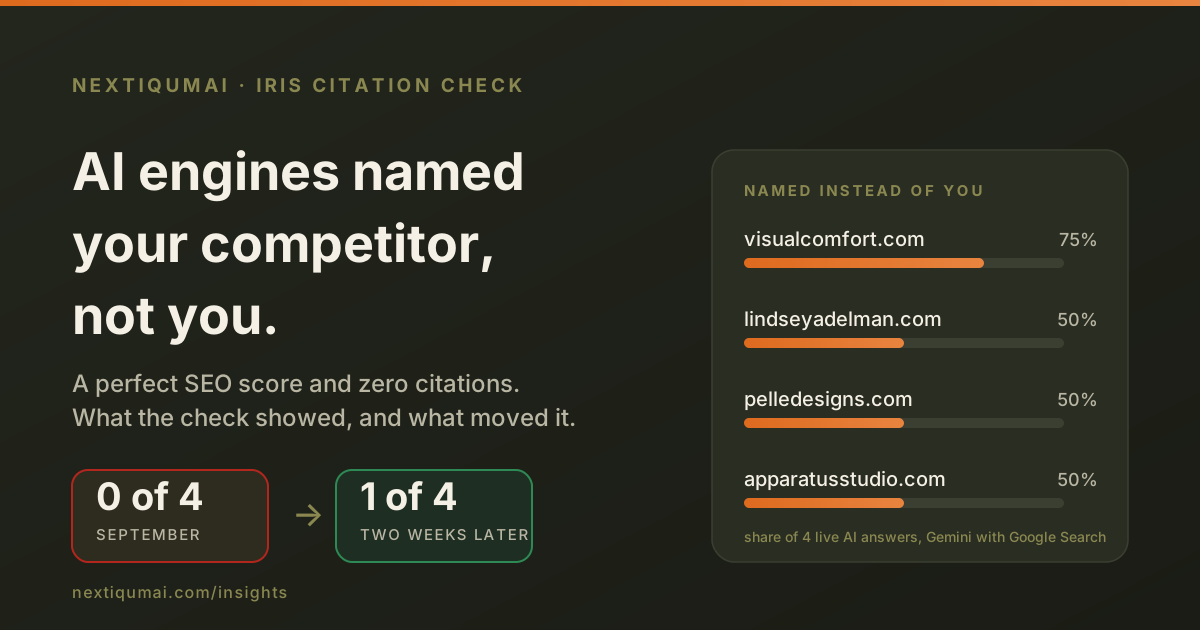
In September we ran a citation check on a luxury lighting retailer in Los Angeles. Its homepage scored 100 for SEO. Its pages were indexed, fast, on HTTPS, with product schema on every listing. By every number a conventional SEO tool produces, it was done.
Then we asked live AI answer engines the four questions its buyers actually ask: where to find sculptural chandeliers, which luxury lighting brands to trust, where to look for statement table lamps, and whether there are showrooms in its own neighbourhood. It was named in 0 of 4 answers. Four other domains were named instead: one in 75% of the answers, three in 50%.
Two weeks later the same four questions returned the retailer in 1 of 4 answers, on the question about showrooms in its area. This post is about what the check showed, what changed in between, and why the order of the fixes matters more than the fixes themselves.
Why does a page with a perfect score get zero citations?
Because the two things are measured differently. An SEO score is a prediction made from your HTML: does the page have the signals a crawler wants. A citation is an observation: when a buyer asks an AI engine a question, does the engine name you. The first is about whether you can be read. The second is about whether you are the best answer, in the engine's judgement, among everyone else who can be read.
The retailer's pages could be read perfectly. They just did not answer the questions. A homepage that says "Luxury Lighting Showroom" is a label. The engines were looking for a sentence they could quote back to a buyer who asked "where can I find a sculptural chandelier for my home", and the brands they named had exactly that sentence on a page the engine had seen.
What the citation check actually tells you
Three things, and the third is the one people skip.
First, the questions. Not keywords: full questions, generated from the page's own category, the way a person phrases them to an assistant. If you disagree with the questions, the check is wrong for you and you should fix that before anything else; the chip under the result lets you change the category.
Second, the answer per question: named or not named, per engine. One engine naming you and two not is a different problem from zero across the board, which is why the result shows a tally per engine rather than one blended number.
Third, who was named instead of you, with their share of the answers. That list is your real competitive set as the engines see it, which is often not the list you had in mind. The retailer was thinking about the showroom down the street. The engines were thinking about four national brands with editorial content about chandeliers.
What changed in two weeks
Not a redesign. Three things, in this order.
Question-shaped sections. The homepage gained three short sections headed with the questions buyers ask, each answered in two or three plain sentences using facts already on the site: where the showroom is, what it carries, how to book a visit. The sentence that got the retailer cited was the one about showrooms in Los Angeles and Woodland Hills. It was true before; it just was not written down as an answer.
An llms.txt file and a Markdown copy of the key pages. The engines read the retailer's catalogue pages through tens of thousands of characters of theme markup; the Markdown mirror gave them the same content at a fifth of the size. We do not claim this alone produces citations, but every engine we test reads these files when they exist.
A Bing Webmaster Tools submission. ChatGPT search runs on Bing's index, and the retailer had never submitted its sitemap there. Ten minutes, free, and until it is done nothing else matters for that engine.
What did not change: the title tags, the meta descriptions, the schema. They were already right, which is why the score was already 100, and why the score was not the problem.
Why the order matters
People who get a zero tend to start with structured data, because it is concrete and a tool can check it. On a page that already scores well that is polishing the part that works. The order that moves citations is: make sure the engines can see you at all (Bing, robots rules, llms.txt), then give them sentences worth quoting (question-shaped answers in your own words), then widen where those sentences live (one comparison post, one directory listing, one review site in your category). Off-site mentions are what engines cite most readily, and they are the slowest item, which is why they go last on the list and first in the calendar.
Named alongside you is not the same as named instead of you
One thing we changed in Iris after this case. The list of competitors under a result used to be headed "Named instead of you" in every case. When the retailer was finally cited, the same four brands were still listed under that heading, which read as a failure on a question it had just won. Now the wording follows the evidence: instead of you when you were not named, alongside you when you were, and a mixed heading when it is some of each. Small, but the whole point of a measured number is that it should not need interpreting.
How to run this on your own site
Audit a page at nextiqumai.com/iris, free and with no sign-up. On paid plans press Citation check under the result. You get the questions, the per-engine tally, and the list of who is named instead of you or alongside you. Monitor the page and the check re-runs weekly, with an email when the number moves either way. If you connect the site to Autopilot, the question-shaped headings and the llms.txt are built for you from sentences already on the page, and you decline anything you do not like before it goes live.
The retailer's number is 1 of 4 today. The honest next step is the three off-site mentions, and the honest timeline for those is a month. We will update this post when the next check lands.